Democratic decay and human rights backlash in federal states

A comparative analysis of democratic constitutionalism decay and resilience.
Discover the project
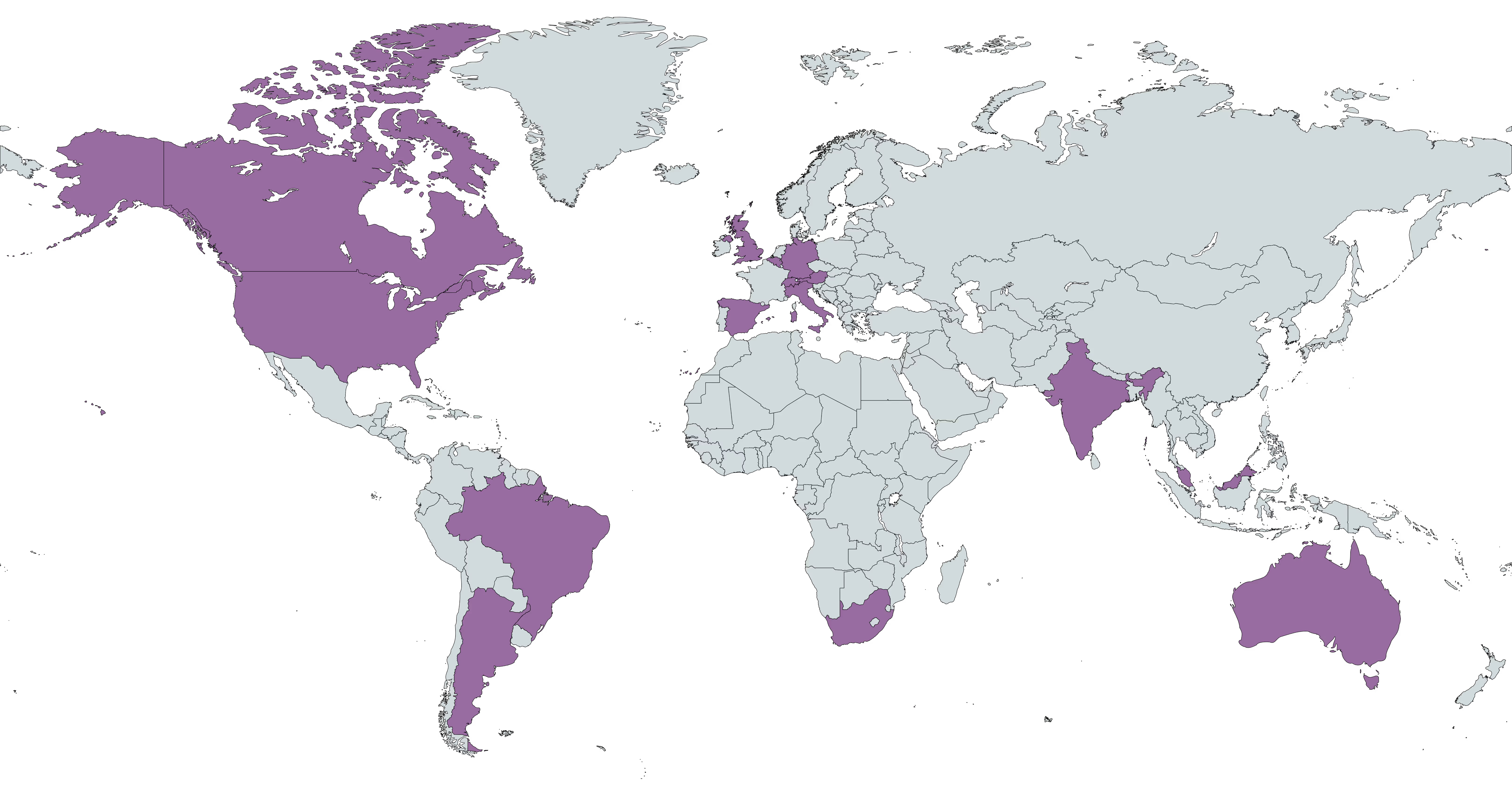
Map of the coutries included in this study

The Problem

Our societies are undergoing a systemic crisis in which climate change, growing inequalities, and the erosion of liberal democracy are intertwined in an unprecedented way. This institutional decline is exacerbated by the rise of far-right movements, the rollback of women's and LGBTQIA+ rights, the widespread use of states of emergency, and police violence—phenomena that directly undermine the rule of law.

Between tensions related to international migration, the impact of new technologies on freedoms, and organized resistance to fundamental rights, political systems are facing increasing instability. Around the world, democratic institutions are facing experiencing unprecedented challenges. The erosion of democracy, challenges to fundamental human rights, and institutional crises are interconnected with broader global challenges such as climate change and social inequality. Understanding these dynamics is critical to protecting democratic governance. This project focuses on federal political systems, which experience these dynamics differently than unitary ones. Federalism indeed adds a further layer of complexity: it can act as a protective bulwark or, on the contrary, as an accelerator of this democratic decay.

Human Rights Backlash

This is organized and often vigorous resistance to the advancement or implementation of human rights. This “backlash,” initially identified by Susan Faludi in relation to women's rights, is now reaching alarming proportions worldwide and in many different forms. Organized resistance against human rights protections, often through legal and institutional mechanisms.

Democratic Decay

This phenomenon describes the gradual decay in democratic quality and the weakening of political institutions that support democratic governance. The gradual weakening of democratic institutions and norms through incremental changes.

Federalism

Traditionally perceived as a “laboratory of democracy” or a bulwark against authoritarianism, federalism can, paradoxically, become a “laboratory of erosion.” We examine this ambivalent role. These challenges do not occur in isolation but reinforce each other in complex ways.

Why This Matters

01
Scientific Impact
Addressing critical gaps in constitutional law research.
Shedding light on contemporary institutional dynamics.
Advancing theoretical frameworks for understanding federalism.
Establishing clear legal definitions of human rights backlash and democratic decay from a constitutional law perspective
02
Societal Impact
Informing public debate on democratic governance.
Supporting evidence-based policy development.
Strengthening institutional resilience against democratic erosion.

A Research Team in Comparative Constitutional Law

Our team brings together expertise in constitutional law, comparative legal analysis, human rights and federalism to examine these critical questions.
Meet the research team
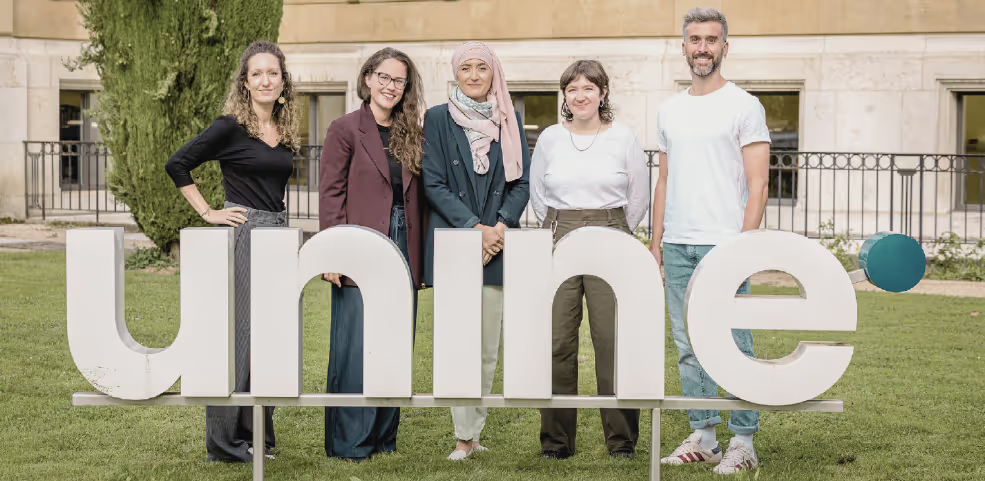
L'équipe de recherche devant le bâtiment de l'université de Neuchâtel